Video
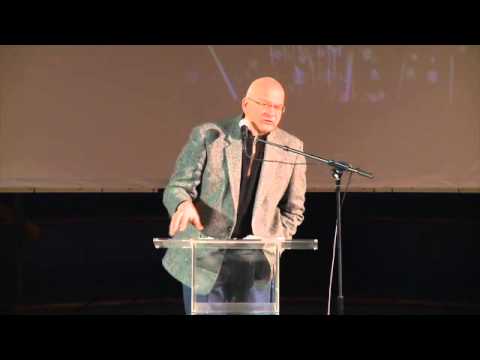
Capital Conversations – N.T. Wright | The Resurrection, Common Mistakes , Spiritual Practices
Resume
N.T. Wright diskuterer betydningen af Jesu opstandelse og dens indflydelse på kristnes liv. Ifølge Wright markerede Jesu opstandelse begyndelsen på Guds nye skabelse, hvilket indebærer, at troende har en aktiv rolle i at realisere denne nye skabelse i verden. Han kritiserer den almindelige opfattelse af evangeliet som en vej til himlen, og fremhæver i stedet, at det handler om at bringe Guds rige til jorden. Wright understreger, at den Hellige Ånd er central for denne proces, idet den giver troende kraft til at udføre gode gerninger og skabe forandring i samfundet. Wright påpeger også almindelige fejltagelser, som kristne gør, når de læser Bibelen, herunder en platonisk tilgang, der nedvurderer den fysiske verden til fordel for en åndelig virkelighed. Han advarer mod at fortolke Guds plan som en afvisning af det jødiske folk, idet Jesus er kulminationen af Guds løfter til Israel. Wright deler desuden sine personlige åndelige praksisser, som bøn, bibellæsning og deltagelse i nadveren, som har holdt hans tro levende gennem årene. Disse elementer er essentielle for at bringe Guds kærlighed ind i verden og støtte de mest trængende.
Læs transskription
Oh, thank you, my friends. Well, um boy, I could have let him go on and on. Really. I this is joy for me. But, Dr. Wright, um cut that short sermon a little short so that we could have a little dialogue about uh some other matters of theology. And um I want to start by asking you about the resurrection. Um Dr. Wright some years ago wrote a book called the Resurrection of the Son of God. I think I I think I can say this. I think it’s the the most significant work on the resur resurrection resurrection in human history. So, I’m going to go that far. Is that okay? He’s too humble to say that, but I I’m I mean that. I can say that. Um and it opened a lot of folks’ eyes to to the meaning of of the resurrection. Here’s what I want to ask you. You’ve built your life on the claim that Jesus rose from the dead. What How does that shape your Monday morning? And for the rest of us? >> When Jesus of Nazareth rose from the dead, new creation was launched into the world. I’ve heard so many Christians talking as though the meaning of the resurrection is simply, “Well, that’s good. He’s he’s now raised from the dead. He’s going to heaven, and so one day we’ll go to heaven with him.” That’s precisely not what Matthew, Mark, Luke, and John say when they’re talking about the resurrection. Um what they’re basically saying is God has raised him from the dead. Therefore, he really was and is Israel’s Messiah, which in terms of the Psalms and the Prophets means he is the true Lord of the world. And this means we have a job to do. And And the job is if he has launched God’s new creation on earth as in heaven, then his followers have got to make this stuff happen. So that that’s that’s the Monday morning um take home, I guess. >> That’s on us. Well, >> yes, but then if you say, as you should, um how can we possibly do new creation? What are you immediately given? John chapter 20, Acts chapter 2, etc. The Holy Spirit. The Holy Spirit is the one who is the life of new creation in himself and who enables us to be people of new creation. That is both new creation in ourselves, you know, Paul says if anyone is in the Messiah, there is a new creation. But that isn’t just I am a new creation, you are a new creation. That’s true. It’s that we have to be outward-facing people of new creation, doing new creation-al things in the world, which can be anything from digging a ditch to playing a symphony to to writing a book to um going and working in a soup kitchen, whatever. There are new creation-al things waiting to be done. And we’re given the Holy Spirit to enable us to do them. We have a >> uh deeply intellectual way of talking about it here at Capital. We say we’re joining God’s work of bringing up there down here. >> That That sounds great to me. Sounds great to me. Um A- And actually, people have often said to me when I’ve talked to the sort of stuff that I have been doing the last few years, how does this affect our evangelism? Because again and again, people have done evangelism in terms of if you were to die tonight, are you sure you would go to heaven? Now, I’d much rather people were faced with that question than um if you come around the corner from with me I’ve got some drugs in my pocket for you. You know that In other words, a little bit of Christian truth is is better than no Christian truth. However, that way of putting it is so misleading. The gospel is not about how do I get up to heaven. It is about how as Jesus taught us to pray, thy kingdom come on earth as in heaven. So, I think the the the key challenge is Listen, God is in the the creator of the world is in the business of recreating his world and he’s doing it through the powerful love which raised Jesus from the dead. And he wants to recruit you to be part of that project. Now, are you up for that? And of course, there is good news about what happens to people after they die and and all that and I and others have written plenty about that. But right now, here and now, this is God’s work. God is doing new creation. And and the way I put it sometimes is this with justification in mind. God has promised to put the whole world right. It’s set very clear in in Old and New Testament. In the present time, he puts human beings right by faith in Jesus. That’s justification. So that they can be part of his putting right project for the world here and now. Is that make sense? >> Amen. Okay, I’ve got another one for you. You’ve spent your life helping people read the Bible. What are the biggest mistakes you see well-meaning Christians make when we do so? >> Yeah. There’s a little book which my publisher is hoping I’ll write which is called 50 things I wish I’d known 50 years ago, which is exactly about this. All the things that I assumed for the first 25, 30 years of my life were what Christianity was all about. >> I would buy that book when you Okay. >> Good. I’ll tell the publisher that. They’ll they’ll be pleased. And we’ll hold you to it. Um I think in technical terms, it’s the mis- the mistake is Platonism, the idea of the Platonic philosophy that this world is really rather substandard at the best. It’s probably trash, but if it’s if it’s nice and pretty and good, well, it’s okay, but it’s not the reality. And the reality is a spiritual, non-spatio-temporal, non-physical world. That’s the philosophy of Plato in a very small nutshell. Um And then from about the 3rd century onwards, some Christian theologians, not all, started to reinterpret the gospel of the kingdom on earth as in heaven in terms of how do I get to heaven? And that’s perhaps the biggest mistake to this day. And it’s easy to miss to make that mistake because if you say, “I’ve become a Christian, I need to read the Bible. Where do I start?” Well, let’s start with Matthew cuz it’s the first gospel. And then you read Matthew saying that Jesus is saying something about the kingdom of heaven, and you will assume, as I did for many years, that the kingdom of heaven means going to heaven when you die. That’s not what Matthew meant by it, and it’s certainly not what Jesus meant by it. And you have to look at what that phrase meant in the Judaic world of the time. And and so until we’ve made that shift and seen that this world, this good, glorious creation, is good and lovely, but it’s flawed because of human failure and sin and the cosmic stuff that goes I love, by the way, what your um vacation Bible school were doing. I didn’t expect to have Canaanite mythology being taught to children in a in a a vacation Bible wonderful when, you know, because so many people live on myths which are kind of the linear descendants of the old pagan myths. And to see how the good news of creation and order and God’s restoration of the world works in relation to those pagan myths, that’s fantastic. Anyway, so um in terms of the mistakes people make, it’s partly um that they assume that the whole story is about how to go to heaven when you die. And then they’re puzzled because lots of the Bible, e.g. the Old Testament, isn’t really about that at all. And so they they So they then have to allegorize it and so on. But it’s it’s also there’s a way of telling the Bible story which gets it radically wrong. And it goes like this. God made us. We messed up. God called Israel and gave them the law to see if that would make things better. And it didn’t. So God said, “Let’s scrap that plan and send Jesus instead.” And with that you have the whole history of Christian anti-Judaism. Oh, that was that was then. We’ve moved on. You know, God tried to make it with the Judaic peoples, the Israelites, but but then it didn’t work. Whereas in the New Testament, it’s God’s plan for Abraham, Isaac, and Jacob and their family that has come to fruition in Jesus. And you only understand what’s happened with Jesus when you see that that was where the Israel plan was going all along. And suddenly all sorts of bits of the Old Testament, the prophets, the Psalms, the Pentateuch, they spring into new life. And then they inform, line by line and chapter by chapter, how you read the New Testament. So that that’s for starters, but obviously I’ve spent my life teaching this stuff, so we could go on. >> I’m sorry. Yeah, I’ve spent my life reading your stuff. Please keep writing. Okay. Um this question I get a bit personal. He has no idea what I’m going to ask him, by the way. Um and but but here it is. But behind all the books what spiritual practices have kept your love for Jesus alive over the years and and even particularly today in this season? >> Very very basic stuff. Nothing surprising. When I was young, I was taught to say prayers every day, usually in the evenings. My mother would pray with myself and my sister. Um and I just assumed that that’s what you do. You pray every day. And that when I was very young. And I was fortunate in being taken to a church where I sang in the choir, which meant that from an early age uh a lot of the Psalms and the great hymns from the Wesleys and so on just became part of who I was, so that the words would come back into my mind uh and I’d find them turning into prayers, etc. But then when I was about 12, I think, somebody came to my school um interesting that the school allowed them to do this cuz it wasn’t a Christian school. It was an ordinary um English young boys’ school. Um and they came with Bible reading notes. It was Scripture Union and they gave these out and they said, “Lots of us find it’s very helpful to read a small passage of the Bible every day. And here are some notes which will give you the passages to read for this next month. And here are some little comments about each day. So each day just a page. Here’s the passage. Here’s the comment. There’s a prayer. Job done.” And seemed like a good idea to me. Didn’t seem like a particularly demanding thing, but it did seem like a good idea. So I started reading the Bible every day when I was 12 and I’ve never seen any reason to stop. Indeed, I’ve seen plenty of reason to develop that. And so um I already knew that I was that I was being called to ministry. So, I knew that sooner or later I’d have to study the Bible more seriously, which meant I’d have to learn Greek. So, I I did Latin and Greek, and then a little bit later I did Hebrew. And so, reading the Bible in its original languages just become part of who I am for decades and decades now. Also, uh, as a typical Anglican, Episcopalian, whatever you want to call it, um, the breaking of bread, the Eucharist, Holy Communion, whatever you call it, absolutely central for me. Um, I cannot imagine living as a Christian without being able to bring all the brokenness of the world and me and my friends and family, all the all the stuff that’s going on, to bring it to the table and see in the breaking of the bread the love of Jesus being extended back out into that world which I brought in. Um, that for me is is absolutely central. And of course, it isn’t an either/or. Um, prayer, scripture, sacrament. And insofar as I’ve been able, and I’ve not been very good at it, then the work of of serving and helping the people at the bottom of the pile. When I was in full-time ministry, that was one of the joys that I had, going to communities that were absolutely at rock bottom. I remember spending a week with one of the parishes in my diocese where it was one of the largest mine mining communities in, uh, the whole of England. And when Margaret Thatcher said, uh, “We’re going to shut down all the coal mines,” which was a punishment because they’d been on strike for a while, that whole community had its heart ripped out. And I went and spent a week with them, and I prayed with them, and I wept with them, and so on just think those sorts of experiences for me go with Bible, prayer, and sacrament. It’s it’s when you’re living and praying and weeping with the people who are and helping as best you can with the people at the bottom of the pile. That’s that’s part of the thing as well. >> Thank you for sharing that. I’m um currently I’m working slowly and methodically through Ephesians. >> Mhm. >> And just in the last year um Dr. Wright wrote uh a commentary on the book of Ephesians. It’s called the Vision of Ephesians. And um it has been a a just a lovely guide for me devotionally such that um I mean truly, just 2 days ago you’d find me at a Chick-fil-A in Salt Lake. Do you know Chick-fil-A? Have you been to a Chick-fil-A? >> Uh >> We should take you to a Chick-fil-A. >> I have. >> Okay. Um I That’s a That’s like a pastoral trope that a pastor in America would talk about Chick-fil-A. But But I’m I’m at this Chick-fil-A and I’m working through Ephesians and I’m bawling my eyes out. I mean, everybody knows me there, too. I’m looking I look like an idiot. But it’s because I found light and life and and how Dr. Wright has awakened me to what the scriptures actually mean. And And here’s why I say that. We have to leave in a moment, forgive me. Um but we have to I do another one of these gatherings in Salt Lake. Um we we want to acquaint you with some of Dr. Wright’s resources, okay? Um and so what what I’m going to ask you to do is to to go to our website capitalchurch.com in the days ahead. We’ll be posting this. Follow us on social media. You’ll see us um bringing some information to you uh to you know, I’ll probably expose you to some of the books behind my questions. Um if you’d like to do a little more study, a little more research. >> Thank you for joining us for this insightful conversation with Dr. N.T. Wright. Be sure to check out our other two interviews posted here online as well as our resources page to help you continue your discipleship to Jesus. You can find it in the description below. Grace and peace.